Over the past months, the CPACS community has been working on numerous enhancements (see Towards CPACS 3.3). We have now combined the work of all the working groups into a beta release in order to provide quick access to all changes in one schema:
The Common Parametric Aircraft Configuration Schema (CPACS) is a data definition for the air transportation system. CPACS enables engineers to exchange information between their tools. It is therefore a driver for multi-disciplinary and multi-fidelity design in distributed environments. CPACS describes the characteristics of aircraft, rotorcraft, engines, climate impact, fleets and mission in a structured, hierarchical manner. Not only product but also process information is stored in CPACS. The process information helps in setting up workflows for analysis modules. Due to the fact that CPACS follows a central model approach, the number of interfaces is reduced to a minimum.
CPACS is available as Open Source and we encourage anyone to make use of it. If you are applying CPACS in a scientific environment and publish any related work, please cite the following artice:
M. Alder, E. Moerland, J. Jepsen and B. Nagel. Recent Advances in Establishing a Common Language for Aircraft Design with CPACS. Aerospace Europe Conference 2020, Bordeaux, France, 2020.
Over the past months, the CPACS community has been working on numerous enhancements (see Towards CPACS 3.3). We have now combined the work of all the working groups into a beta release in order to provide quick access to all changes in one schema:
As we are approaching the next CPACS release, I would like to present the major enhancements and adjustments we have been discussing over the last months. It should be emphasized that these are not yet final decisions and everyone is invited to participate in the current topics.
The initiators and …
An increasing amount of aircraft design projects focuses on sustainable and green aviation enabled by advanced system architectures. To reflect the needs of the required data exchange within these projects, an appropriate system parametrization in CPACS needs to be developed. For this purpose we would like to invite experts in …
We are pleased to announce CPACS 3.2! Many thanks to everyone who has contributed to the latest enhancements.
- Replaced tool-specific elements with xsd:any element and strict schema request for validation
- UIDs adapted to type xsd:ID and xsd:IDREF
- UIDs optional …

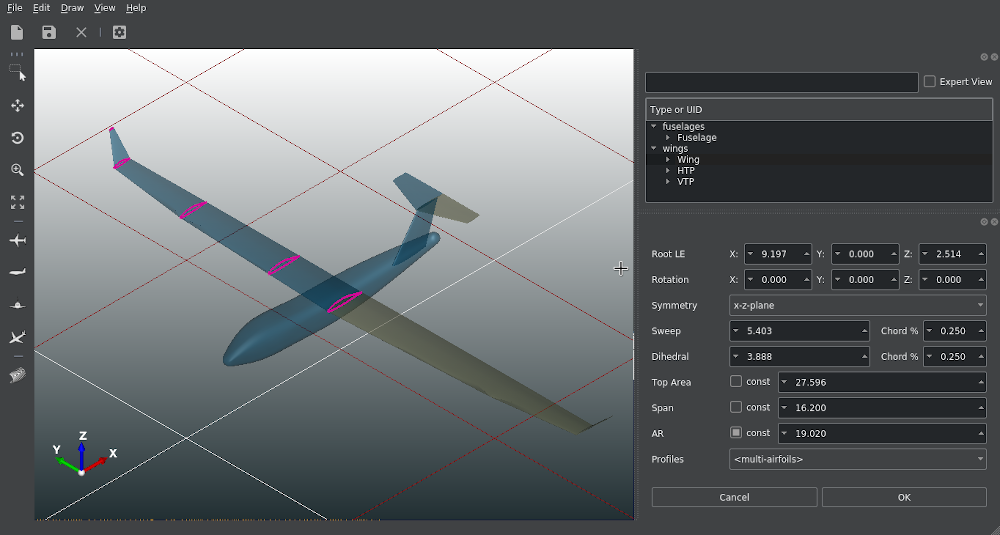
The CPACS Creator, developed by Malo Grougard from CFS Engineering, can now be downloaded and tested. It allows creating airplane configurations based on the CPACS parametrization from scratch using the TiGL-viewer. Furthermore, existing CPACS files can be loaded and directly edited. Detailed information on the functionality of the CPACS creator …

After an intensive development period, developers of the DLR Institute for Simulation and Software Technology have released the geometry library TiGL as version 3.0. TiGL 3 is now compatible with CPACS 3 and offers many improvements to previous versions, such as modeling the wing and fuselage structure.
The complete …

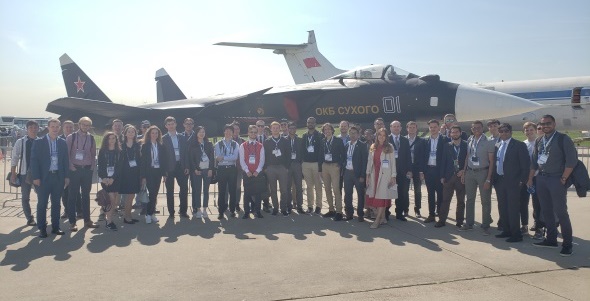
CPACS is used as a key technology in the "IFAR-X Challenge". Young engineers and scientists from over 20 countries collaborate in developing a multi-disciplinary aircraft design process with the common goal of integrating green technologies in future aircraft.
A first meeting took place from Aug. 29 to Sept. 1 …
We are pleased to announce CPACS 3.1! Many thanks to everyone who has contributed to the latest enhancements.
- Redefinition of aeroPerformanceMaps
- Added nodes for detailed engine pylons and nacelles
- Added nodes to model generic walls
- Extension of material definition
- Added fuselage compartment definition …
We are happy to announce CPACS 3.0 which is a major release with many new updates and improvements. Below you find a selection of some features. Please see GitHub for the full changelog.
- New component segment definition
- Added nodes for the geometry of …
To all users of CPACS,
The use of CPACS as the central data model for collaborative aircraft design processes is constantly increasing. Experience from the past years has shown, that we must not disregard usability aspects. Therefore, in the content of the ATLAs project the development of an editor for …