CPACS describes a system of systems from the top down: a generic concept such as an aircraft is broken down into its components, and these into ever more detailed parts. This follows the design process, which starts with few parameters in the conceptual design and adds detail as the design matures.
Some data is described from the bottom up instead. Parts that are used several times, such as airfoils, materials or engines, are defined once in a library and referenced by their @uID wherever they are used (section 6). The combination of both directions is called a middle-out approach.
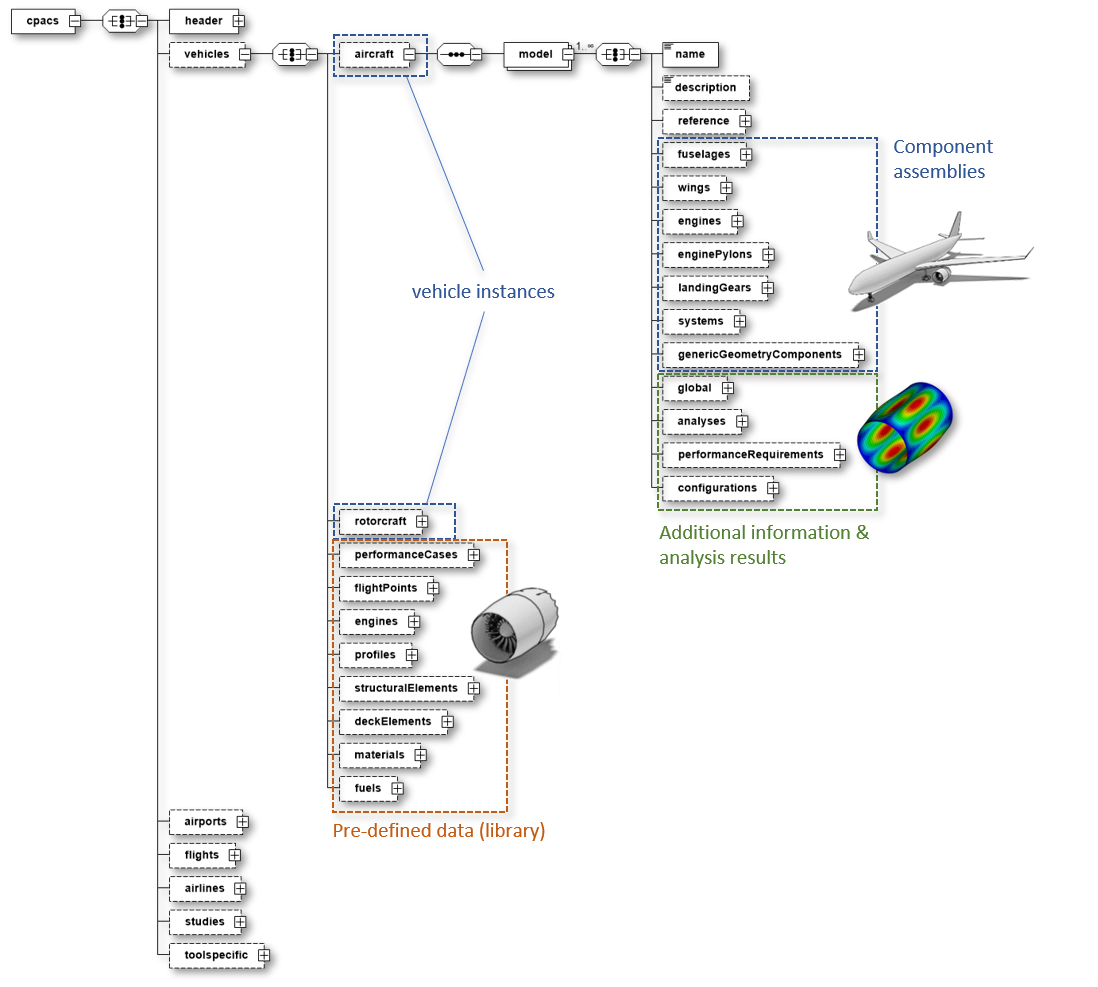
The figure shows the top levels of the hierarchy. Below the root element <cpacs>, the <header> identifies the dataset and its version, and <vehicles> holds the vehicles. An aircraft or rotorcraft is described by one or more models, each with its components, i.e. the geometry and what is built into it, and with the data that belongs to the model as a whole: reference values, configurations, global parameters, analyses and requirements. The model of a rotorcraft is built up in the same way, with rotors, rotor blades and drive systems among its components. Next to the vehicles, <vehicles> holds the library that the models reference. The other children of the root describe what lies beyond a single vehicle, such as airports, flights, airlines and studies, and <toolspecific> holds data of individual tools outside the standardized structure.